
Why Should We Care?
When species like the smalltooth sawfish decline, the effects don’t stop with them. Changes at the top of the food web can ripple through entire ecosystems, influencing prey populations, habitat conditions, and overall biodiversity. Over time, these shifts can weaken the stability of coastal systems and reduce their ability to support the many species that depend on them—including those humans rely on.
What starts with one species can reshape an entire ecosystem.
Impacts on Sawfish vs Impacts on Ecosystems

The decline of smalltooth sawfish affects more than just one species. While individual sawfish experience direct impacts that reduce their ability to survive and reproduce, their disappearance also triggers larger changes across entire ecosystems.
Understanding both perspectives helps reveal the full scope of what is at risk
(Ripple et al., 2016; Heithaus et al., 2008).

Image sourced from Unsplash via Wix
Smalltooth sawfish. Credit: NOAA Fisheries

Impacts on Sawfish
As pressures like habitat loss and bycatch increase, smalltooth sawfish experience reduced survival, limited reproduction, and restricted movement across their range. These impacts can slow population recovery and make the species more vulnerable to additional environmental changes.
Impacts on Ecosystems
The loss of apex predators can alter species interactions and disrupt the balance of coastal ecosystems. Changes in predator presence influence prey behavior and distribution, which can affect habitat structure, biodiversity, and overall ecosystem function (Heithaus et al., 2008).
Image sourced from Unsplash via Wix
The Ripple effect
How the loss of one predator reshapes an entire ecosystem
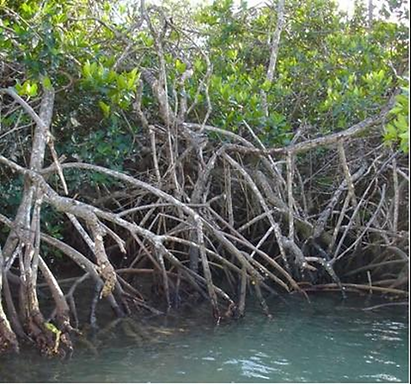
Mangroves at Risk
Mangrove ecosystems provide critical shelter and nursery habitat for many marine species, including juvenile sawfish. When these systems are disrupted, the foundation of the ecosystem begins to weaken.
Image sourced from Unsplash via Wix

Predators Decline
As apex predators like sawfish decline, their influence on prey populations and behavior is reduced. This shift alters the balance of the food web and removes a key stabilizing force.
Photo by Jamie Mae Darrow/Florida Fish and Wildlife Research Institute
via WLRN Public Media.

Prey Populations Shift
Without natural regulation, some prey species may increase or change behavior, which can lead to imbalances in the ecosystem and increased pressure on lower trophic levels. These interconnected changes are an example of trophic cascade, where the loss of apex predators can trigger widespread effects throughout an ecosystem.
Image sourced from Unsplash via Wix
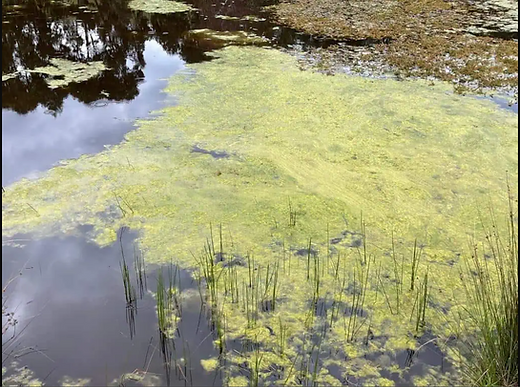
Habitat Changes
Changes in species interactions can affect habitat structure over time, influencing vegetation, water quality, and the overall health of coastal ecosystems.
Photo: Andy Serrell
via United States Environmental Protection Agency (n.d.)

Ecosystem Instability
As these changes accumulate, the ecosystem becomes less stable and less resilient, affecting biodiversity and reducing its ability to support both wildlife and human communities.
Image sourced from Unsplash via Wix
Photo: National Park Service (NPS), via Climate Adaptation Explorer (n.d.).

Loss of Biodiversity
As ecosystems become imbalanced, biodiversity can decline, reducing the variety of species and weakening ecosystem resilience. Lower biodiversity limits the ability of ecosystems to adapt to environmental changes and can reduce the services they provide to both wildlife and human communities (Ripple et al., 2016).
Image sourced from Unsplash via Wix

Human Implications
Healthy coastal ecosystems support fisheries, protect shorelines, and contribute to overall ocean health. When these systems are disrupted, the impacts extend beyond wildlife, affecting resources and communities that depend on them.
Decline
A shrinking Range and Growing Consequenses
Once widespread across coastal ecosystems, smalltooth sawfish have experienced severe population declines and are now largely restricted to South Florida (Carlson et al., 2022; Waters et al., 2014). As apex predators, their continued loss has the potential to destabilize coastal food webs and fundamentally alter ecosystem structure (Ripple et al., 2016).
Today, the smalltooth sawfish occupies only a fraction of its historical range, largely due to human impacts on coastal ecosystems.

Photo via The Field Museum.

←Click Here
Explore the history, decline, and ongoing recovery of endangered smalltooth sawfish in Florida. Marine biologist Tonya Wiley explains how fishing pressure, habitat loss, and human activity contributed to population declines while also highlighting the research, conservation efforts, and public outreach helping support recovery today. The talk also provides a fascinating look into sawfish behavior, nursery habitats, ecological importance, and the challenges scientists still face in protecting one of Florida’s most unique marine predators.