

The Sawfish Story
Smalltooth Sawfish (Pristis pectinata) are one of the most unique and endangered marine predators in U.S. waters. Recognizable by their long, saw-like snout called a rostrum, these animals once ranged widely across coastal ecosystems but are now found primarily in South Florida. Despite their quiet presence, sawfish play an important role in maintaining balance in the ecosystems they inhabit, interacting with a wide range of species across mangroves, estuaries, and coastal waters.


Photo: Fabián Pina Amargós & Fernando Bretos, via The Ocean Foundation (2022).

Image sourced from Unsplash via Wix
Like an immune system for the ocean, apex predators help keep ecosystems balanced
Ecosystem Health
Understanding Biodiversity
Smalltooth sawfish rely on a network of connected coastal habitats, including estuaries, mangroves, and seagrass beds. These environments support a high level of biodiversity and provide critical resources such as food, shelter, and nursery areas for juvenile sawfish. Because so many species depend on these same habitats, the presence of sawfish reflects the overall health and stability of the ecosystem


Life Cycle
Growing up in protected waters
Smalltooth sawfish are generally slow-moving coastal predators that use their saw-like rostrum to detect and capture prey in shallow waters. Female sawfish give birth in protected coastal nursery habitats, where juveniles spend their earliest life stages sheltered among mangroves and estuarine vegetation. Young sawfish rely heavily on these shallow habitats, where calm waters and dense root systems provide protection during their most vulnerable stages of development. These nursery areas act as critical safe zones, allowing juveniles to grow before eventually moving into larger coastal ecosystems. Because early survival depends so heavily on specific environmental conditions, smalltooth sawfish are especially vulnerable to habitat loss and environmental change.
Image sourced from Unsplash via Wix
Image sourced from Unsplash via Wix
Habitat Connection
Movement Across Coastal Systems
Juvenile sawfish depend on nursery habitats shaped by environmental conditions such as salinity and freshwater flow, while adults move across multiple ecosystems (Lear et al., 2019; Simpfendorfer et al., 2011; Carlson et al., 2014). This movement connects habitats and links food webs across coastal environments.

Image generated using AI design tools and edited by author

Images in slideshow all sourced from Unsplash via Wix
-
Smalltooth sawfish can detect the tiny electrical signals produced by other animals, helping them hunt even in dark or muddy water (Wueringer et al., 2012).
-
Despite their shark-like appearance, smalltooth sawfish are actually rays, making them distant relatives of stingrays rather than sharks (NOAA Fisheries, n.d.).
-
The “saw” on a sawfish is covered in specialized sensors that help it locate hidden prey beneath the sand (Wueringer et al., 2012).
-
Smalltooth sawfish have been observed leaping completely out of the water despite their large size (Florida Fish and Wildlife Conservation Commission [FWC], n.d.).
-
A smalltooth sawfish’s rostrum can contain more than 20 teeth on each side, giving it the appearance of a living chainsaw (NOAA Fisheries, n.d.).
-
Juvenile smalltooth sawfish are born with protective coverings on their rostral teeth so they do not injure their mother during birth (Dulvy et al., 2016).

Image generated using AI design tools and edited by author using Canva
Why They Matter
A role in the food web
The smalltooth sawfish occupies a high trophic level, feeding primarily on teleost fishes and rays (Poulakis et al., 2017). By influencing both prey populations and behavior, marine predators like sawfish contribute to the structure and function of coastal ecosystems (Heithaus et al., 2008). These interactions support biodiversity and help maintain stable food web dynamics (Ripple et al., 2016).

Photo: via Wildlife Nomads (n.d.).
Big Picture - Bon Appétit
As an apex predator, the smalltooth sawfish plays a key role in maintaining ecosystem balance.
By feeding on fish and rays, it helps regulate mid-level populations and supports food web stability. But its influence goes beyond predation. Marine predators also affect how prey behave and where they move, shaping entire ecosystems through both direct and indirect interactions.
(Heithaus et al., 2008)

Video sourced from Unsplash via Wix
A Species In Decline

Source: IUCN Red List (Carlson et al., 2022).

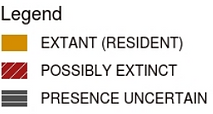

The International Union for Conservation of Nature Red List
Urgent Conservation Needs
The smalltooth sawfish is currently listed as critically endangered, with populations now largely restricted to South Florida after a significant decline in its historical range
(IUCN, 2022).
Source: IUCN Red List (Carlson et al., 2022).